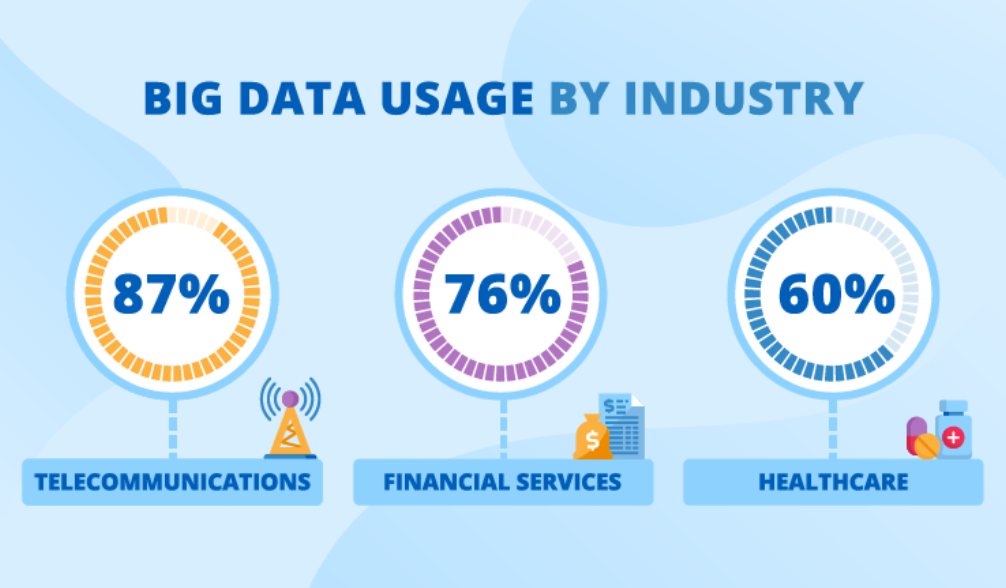
In the digital age, data has become one of the most valuable assets for organizations across the globe. Every click, transaction, interaction, and movement generates data that can be analyzed for insights. This massive volume of structured and unstructured data—commonly referred to as big data—is transforming industries in ways that were unimaginable just a decade ago.
From healthcare and finance to retail and transportation, big data is revolutionizing how businesses operate, make decisions, and deliver value to customers. Companies that effectively harness big data gain a competitive advantage by improving efficiency, reducing costs, enhancing customer experiences, and predicting future trends.
This article explores real-world examples of how big data is changing industries globally, demonstrating its powerful impact and highlighting why it has become a cornerstone of modern business strategy.
What Is Big Data?
Big data refers to extremely large datasets that cannot be processed using traditional data-processing tools. It is typically defined by the “3 Vs”:
- Volume: Massive amounts of data generated daily
- Velocity: The speed at which data is created and processed
- Variety: Different types of data (structured, semi-structured, unstructured)
Advanced technologies such as machine learning, artificial intelligence, and cloud computing are used to analyze this data and extract meaningful insights.
1. Healthcare: Improving Patient Outcomes
The healthcare industry is one of the most significant beneficiaries of big data. By analyzing patient records, clinical data, and even wearable device information, healthcare providers can make better decisions and improve patient outcomes.
Example: Predictive Analytics in Hospitals
Hospitals use big data to predict patient admissions, identify high-risk patients, and prevent diseases. For instance, predictive models can analyze patient history and detect early signs of chronic illnesses such as diabetes or heart disease.
Example: Personalized Medicine
Big data enables personalized treatment plans based on a patient’s genetic makeup, lifestyle, and medical history. This approach increases the effectiveness of treatments while reducing side effects.
Impact:
- Reduced hospital readmission rates
- Early disease detection
- Improved treatment accuracy
2. Retail: Enhancing Customer Experience
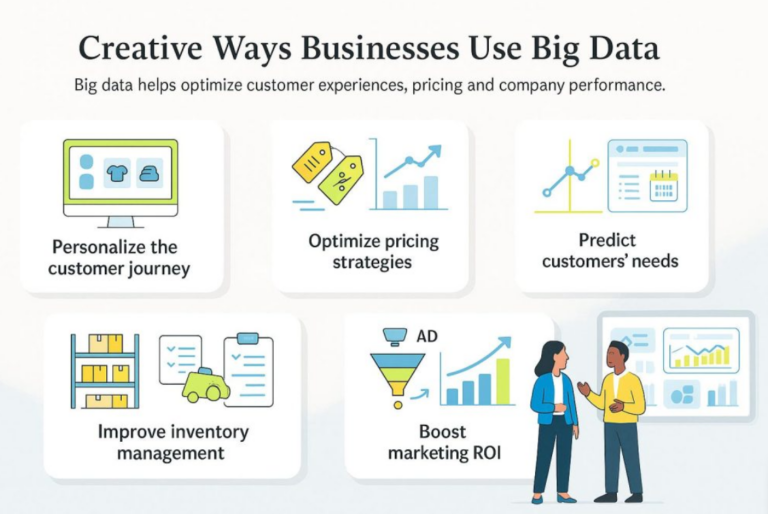
Retail companies rely heavily on big data to understand customer behavior and preferences. By analyzing purchasing patterns, browsing history, and social media interactions, retailers can create personalized shopping experiences.
Example: Recommendation Systems
E-commerce platforms use big data to recommend products based on user behavior. These systems analyze past purchases and browsing data to suggest relevant items.
Example: Inventory Management
Retailers use big data analytics to predict demand and optimize inventory levels. This ensures that popular products are always in stock while minimizing overstocking.
Impact:
- Increased sales and customer satisfaction
- Better inventory control
- Targeted marketing campaigns
3. Finance: Detecting Fraud and Managing Risk
The financial industry deals with massive amounts of data every second. Big data analytics helps banks and financial institutions detect fraud, manage risks, and make smarter investment decisions.
Example: Fraud Detection Systems
Banks use big data algorithms to monitor transactions in real time. If a transaction appears suspicious—such as an unusual purchase location or amount—the system can flag it instantly.
Example: Credit Scoring
Traditional credit scoring models are being enhanced with big data. Financial institutions now consider alternative data sources such as social behavior and transaction patterns to assess creditworthiness.
Impact:
- Reduced financial fraud
- Improved risk management
- More accurate credit assessments
4. Transportation: Optimizing Routes and Reducing Costs
Big data is transforming the transportation and logistics industry by improving efficiency and reducing operational costs.
Example: Ride-Sharing Services
Ride-sharing platforms use big data to match drivers with passengers, optimize routes, and adjust pricing dynamically based on demand.
Example: Logistics Optimization
Logistics companies analyze traffic patterns, weather conditions, and delivery data to optimize routes and reduce fuel consumption.
Impact:
- Faster delivery times
- Lower operational costs
- Improved customer satisfaction
5. Manufacturing: Enabling Smart Factories
Manufacturing is undergoing a digital transformation with the integration of big data and the Internet of Things (IoT).
Example: Predictive Maintenance
Sensors installed in machinery collect data on performance and usage. Big data analytics can predict when equipment is likely to fail, allowing companies to perform maintenance before breakdowns occur.
Example: Quality Control
Manufacturers use big data to monitor production processes in real time and detect defects early.
Impact:
- Reduced downtime
- Increased production efficiency
- Higher product quality
6. Agriculture: Increasing Crop Yields
Big data is playing a crucial role in modern agriculture by helping farmers make data-driven decisions.
Example: Precision Farming
Farmers use data from satellites, sensors, and weather forecasts to determine the best time to plant, irrigate, and harvest crops.
Example: Soil Analysis
Big data tools analyze soil conditions to recommend the right fertilizers and crops for specific areas.
Impact:
- Higher crop yields
- Reduced resource wastage
- Sustainable farming practices
7. Marketing: Driving Data-Driven Strategies
Marketing has been completely transformed by big data. Companies can now analyze customer behavior and tailor their campaigns accordingly.
Example: Customer Segmentation
Businesses use big data to segment customers based on demographics, behavior, and preferences. This allows for highly targeted marketing campaigns.
Example: Real-Time Campaign Optimization
Marketers can track campaign performance in real time and adjust strategies instantly to improve results.
Impact:
- Higher conversion rates
- Improved ROI on marketing campaigns
- Better customer engagement
8. Energy: Improving Efficiency and Sustainability
The energy sector uses big data to optimize production, distribution, and consumption.
Example: Smart Grids
Smart grids use data to monitor electricity usage and adjust supply accordingly. This reduces energy waste and improves efficiency.
Example: Renewable Energy Optimization
Big data helps predict energy production from renewable sources such as wind and solar by analyzing weather patterns.
Impact:
- Reduced energy waste
- Improved grid reliability
- Increased use of renewable energy
9. Education: Enhancing Learning Experiences
Educational institutions are leveraging big data to improve teaching methods and student outcomes.
Example: Learning Analytics
Schools and universities analyze student performance data to identify areas where students need help.
Example: Personalized Learning
Big data enables personalized learning paths based on individual student needs and progress.
Impact:
- Improved student performance
- Reduced dropout rates
- More effective teaching strategies
10. Entertainment: Delivering Personalized Content
The entertainment industry uses big data to understand audience preferences and deliver personalized content.
Example: Content Recommendations
Streaming platforms analyze viewing habits to recommend movies and shows tailored to each user.
Example: Content Creation
Production companies use data analytics to determine what types of content are likely to succeed.
Impact:
- Increased viewer engagement
- Higher subscription rates
- Better content strategy
11. Telecommunications: Enhancing Network Performance
Telecommunication companies generate vast amounts of data from network usage. Big data helps improve service quality and customer satisfaction.
Example: Network Optimization
Data analytics helps telecom providers identify network congestion and optimize performance.
Example: Customer Churn Prediction
Companies analyze customer behavior to predict which users are likely to switch providers and take preventive actions.
Impact:
- Improved network reliability
- Reduced customer churn
- Better service quality
12. Government: Smart Cities and Public Services
Governments around the world are using big data to improve public services and build smart cities.
Example: Traffic Management
Cities use data from sensors and cameras to manage traffic flow and reduce congestion.
Example: Public Safety
Law enforcement agencies use big data to predict crime patterns and allocate resources effectively.
Impact:
- Improved urban planning
- Enhanced public safety
- Efficient use of resources
Challenges of Big Data Implementation
Despite its benefits, implementing big data solutions comes with challenges:
- Data Privacy Concerns: Protecting sensitive information is critical
- High Costs: Infrastructure and tools can be expensive
- Data Quality Issues: Inaccurate data can lead to poor decisions
- Skill Shortage: There is a growing demand for skilled data professionals
Organizations must address these challenges to fully leverage big data.
Future of Big Data
The future of big data looks promising, with advancements in AI, machine learning, and cloud computing driving innovation. Some key trends include:
- Real-Time Analytics: Faster decision-making capabilities
- Edge Computing: Processing data closer to its source
- AI Integration: Smarter and more automated insights
- Data Democratization: Making data accessible to more users
As technology evolves, big data will continue to play a crucial role in shaping industries worldwide.
Conclusion
Big data is no longer just a buzzword—it is a powerful tool that is transforming industries across the globe. From healthcare and finance to agriculture and entertainment, real-world applications of big data are driving innovation, improving efficiency, and enhancing customer experiences.
Organizations that embrace big data can unlock valuable insights, make informed decisions, and stay ahead of the competition. As data continues to grow in volume and importance, its impact on industries will only become more profound.
The examples discussed in this article highlight how big data is not just changing industries—it is redefining how the world operates.