The rapid growth of digital technology has completely reshaped the way people shop and how businesses sell products. One of the most powerful forces behind this transformation is Big Data. In the world of e-commerce and online shopping, Big Data is no longer just a buzzword—it is a core driver of innovation, personalization, and business success.
Every click, search, purchase, review, and even time spent on a product page generates data. When collected and analyzed properly, this data provides valuable insights that help online businesses understand customer behavior, predict trends, optimize pricing, and improve overall user experience.
In this article, we will explore how Big Data is changing e-commerce and online shopping in depth, covering its applications, benefits, challenges, and future impact.
What Is Big Data in E-Commerce?
Big Data refers to extremely large and complex datasets that cannot be processed using traditional data processing tools. In e-commerce, Big Data comes from multiple sources such as:
- Website browsing activity
- Mobile app usage
- Purchase history
- Social media interactions
- Customer reviews and ratings
- Search queries
- Location data
- Payment behavior
These data points are collected in real time and analyzed using advanced technologies such as machine learning, artificial intelligence, and predictive analytics.
The goal is simple: turn raw data into actionable insights that improve business decisions and customer satisfaction.
The Role of Big Data in Online Shopping
Big Data has fundamentally changed how online shopping works. Instead of relying on assumptions, businesses now make decisions based on real user behavior.
Here are some of the most important roles Big Data plays in e-commerce:
1. Understanding Customer Behavior
Big Data helps businesses analyze how customers interact with their platforms. This includes:
- Which products are viewed most often
- How long users stay on a page
- What leads to abandoned carts
- Which devices customers use
By studying this behavior, companies can identify patterns and improve their website design, product placement, and marketing strategies.
2. Personalized Shopping Experience
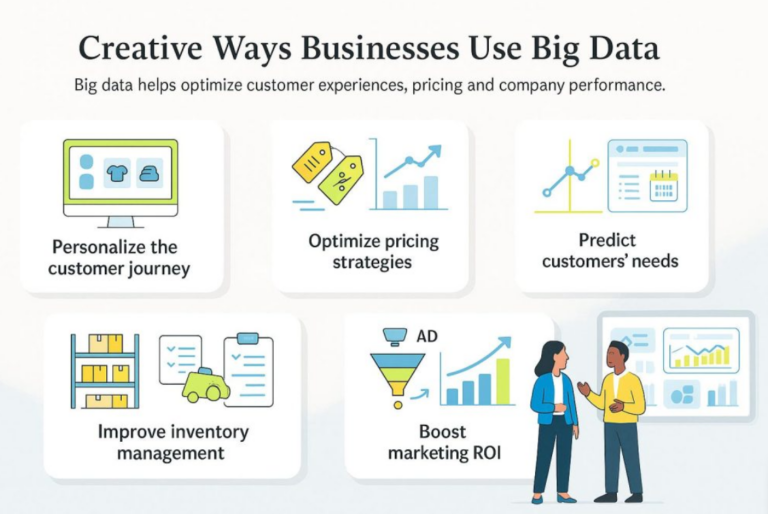
One of the biggest impacts of Big Data is personalization.
E-commerce platforms like Amazon, eBay, and Shopify-powered stores use data-driven algorithms to recommend products based on:
- Past purchases
- Browsing history
- Similar customer behavior
- Wishlist activity
For example, if a customer frequently searches for running shoes, the system will automatically recommend sportswear, fitness accessories, and related products.
This level of personalization increases engagement and boosts conversion rates significantly.
3. Dynamic Pricing Strategies
Big Data enables dynamic pricing, where product prices change based on demand, competition, and customer behavior.
Factors influencing pricing include:
- Time of day
- Seasonal demand
- Inventory levels
- Competitor pricing
- Customer location
For example, airline tickets and hotel bookings often change prices multiple times per day based on real-time data analysis.
This helps businesses maximize profits while staying competitive.
4. Improved Inventory Management
Managing inventory is one of the biggest challenges in e-commerce. Big Data solves this problem by predicting demand accurately.
Using historical sales data and market trends, businesses can:
- Avoid overstocking or understocking
- Predict seasonal demand
- Optimize warehouse operations
- Reduce storage costs
For example, an online fashion store can predict which clothing styles will be popular in the next season and stock accordingly.
5. Enhanced Customer Service
Big Data also improves customer support systems.
By analyzing customer interactions, businesses can:
- Identify common complaints
- Predict customer issues before they occur
- Improve chatbot responses
- Reduce response time
AI-powered chatbots use Big Data to provide instant and accurate responses, improving customer satisfaction.
How Big Data Improves Marketing in E-Commerce
Marketing in e-commerce has become highly data-driven. Instead of generic advertisements, businesses now create highly targeted campaigns.
1. Targeted Advertising
Big Data allows businesses to segment customers based on:
- Age
- Gender
- Location
- Interests
- Shopping behavior
This ensures that ads are shown only to people who are most likely to buy the product.
For example, someone who recently searched for smartphones will see ads for mobile deals instead of unrelated products.
2. Email Marketing Optimization
Email campaigns are now more effective due to Big Data insights.
Companies can personalize emails based on:
- Past purchases
- Abandoned carts
- Product recommendations
- Special discounts
This increases open rates and conversion rates significantly.
3. Social Media Insights
Social media platforms generate massive amounts of data. Businesses use this data to:
- Track trending products
- Monitor brand reputation
- Analyze customer sentiment
- Improve engagement strategies
This helps brands stay relevant in a competitive market.
Big Data and Customer Experience
Customer experience is at the heart of e-commerce success, and Big Data plays a major role in enhancing it.
Faster Search Results
Search engines within e-commerce platforms use Big Data to deliver accurate results based on user intent.
Smarter Recommendations
Recommendation engines continuously learn from user behavior to suggest better products.
Seamless Checkout Process
By analyzing drop-off points in the checkout process, businesses can simplify payment systems and reduce cart abandonment rates.
Fraud Detection and Security
Online shopping involves financial transactions, making security a major concern. Big Data helps detect and prevent fraud in real time.
It can identify:
- Suspicious login attempts
- Unusual purchase patterns
- Fake accounts
- Payment anomalies
Machine learning models continuously analyze transactions and flag suspicious activities before they cause harm.
Benefits of Big Data in E-Commerce
The advantages of Big Data in online shopping are extensive:
1. Higher Revenue
Better targeting and personalization lead to increased sales.
2. Improved Decision Making
Businesses rely on data instead of guesswork.
3. Better Customer Retention
Personalized experiences increase loyalty.
4. Operational Efficiency
Automation and predictive analytics reduce costs.
5. Competitive Advantage
Companies using Big Data stay ahead of competitors.
Challenges of Big Data in E-Commerce
Despite its benefits, Big Data also presents challenges.
1. Data Privacy Concerns
Customers are increasingly concerned about how their data is used. Regulations like GDPR require businesses to handle data responsibly.
2. High Implementation Costs
Advanced analytics tools and infrastructure can be expensive.
3. Data Overload
Too much data can make it difficult to extract meaningful insights.
4. Security Risks
Large datasets can become targets for cyberattacks.
5. Technical Complexity
Analyzing Big Data requires skilled professionals and advanced tools.
Real-World Examples of Big Data in E-Commerce
Amazon
Amazon is one of the best examples of Big Data usage. It uses customer data to:
- Recommend products
- Optimize pricing
- Manage inventory
- Predict demand
Alibaba
Alibaba uses Big Data for real-time analytics during shopping events like Singles’ Day, processing millions of transactions per minute.
Netflix (E-commerce of Digital Products)
Netflix uses Big Data to recommend content based on viewing history, improving user engagement and retention.
The Future of Big Data in Online Shopping
The future of Big Data in e-commerce looks extremely promising. Some emerging trends include:
1. Artificial Intelligence Integration
AI will make data analysis even more accurate and automated.
2. Voice Commerce
With smart assistants like Alexa and Google Assistant, voice-based shopping will grow rapidly.
3. Predictive Shopping
Systems will predict what customers need before they even search for it.
4. Augmented Reality Shopping
Big Data will enhance AR experiences, allowing customers to virtually try products.
5. Real-Time Personalization
Websites will dynamically change based on user behavior in real time.
Conclusion
Big Data has completely transformed the e-commerce and online shopping industry. From personalized recommendations to fraud detection and dynamic pricing, its impact is visible in every aspect of digital retail.
Businesses that leverage Big Data effectively gain a significant competitive advantage by improving customer experience, increasing sales, and optimizing operations.
As technology continues to evolve, the role of Big Data will only grow stronger, shaping the future of online shopping into a more intelligent, efficient, and personalized experience.