In today’s digital-first economy, data has become one of the most valuable assets a company can possess. Every click, purchase, search, and interaction generates information that can be analyzed and transformed into actionable insights. This is where Big Data plays a transformative role. Instead of relying on intuition or traditional market research alone, businesses now use massive datasets and advanced analytics to predict future trends with remarkable accuracy.
From retail and healthcare to finance and entertainment, organizations are leveraging Big Data to stay ahead of competitors, anticipate customer behavior, and make smarter strategic decisions. But how exactly does Big Data help companies predict the future? And why has it become such a critical part of modern business intelligence?
This article explores in detail how Big Data enables companies to forecast trends, the technologies behind it, real-world applications, and the challenges involved.
Understanding Big Data
Before diving into predictive capabilities, it is important to understand what Big Data actually means.
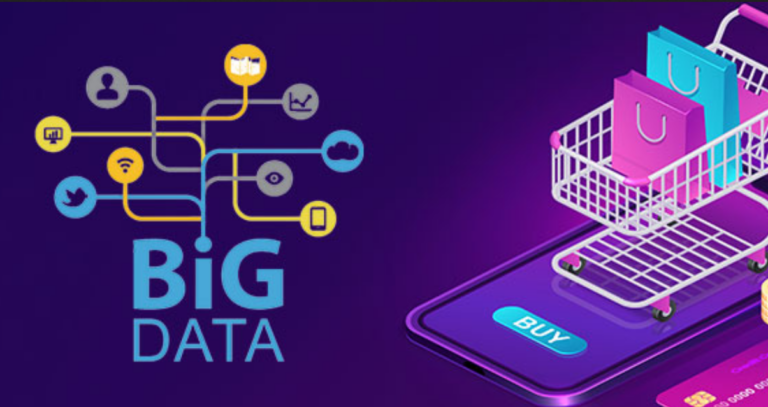
Big Data refers to extremely large and complex datasets that cannot be processed using traditional data processing methods. It is often defined by the “3 Vs”:
- Volume – Massive amounts of data generated every second
- Velocity – The speed at which data is created and processed
- Variety – Different types of data such as text, images, videos, and sensor data
Some experts also add additional Vs like Veracity (accuracy) and Value (usefulness).
Sources of Big Data include:
- Social media platforms
- E-commerce transactions
- Mobile apps
- IoT (Internet of Things) devices
- Customer relationship management (CRM) systems
- Website analytics
All of this data becomes the foundation for predictive analytics.
The Connection Between Big Data and Predictive Analytics
Predicting future trends is not about guessing—it is about analyzing patterns. Big Data enables predictive analytics by providing large datasets that reveal hidden patterns and correlations.
Predictive analytics uses:
- Statistical algorithms
- Machine learning models
- Data mining techniques
- Artificial intelligence
These technologies analyze historical and real-time data to forecast what is likely to happen next.
For example:
- Retailers can predict which products will be popular next season
- Banks can identify customers likely to default on loans
- Streaming platforms can suggest future hit content
The more data available, the more accurate the predictions become.
How Big Data Helps Predict Future Trends
1. Identifying Patterns in Consumer Behavior
One of the most powerful uses of Big Data is understanding customer behavior. Every interaction a customer has with a brand leaves a digital footprint.
Companies analyze:
- Purchase history
- Browsing behavior
- Search queries
- Social media engagement
By studying these patterns, businesses can identify emerging trends before they become mainstream.
For example, if thousands of users suddenly start searching for eco-friendly products, companies can quickly shift production and marketing strategies to meet this demand.
2. Real-Time Data Analysis
Traditional market research often relies on surveys and reports that may take weeks or months to complete. Big Data, however, allows real-time analysis.
This means companies can:
- Track trending topics instantly
- Respond to market changes immediately
- Adjust pricing strategies dynamically
For example, ride-sharing apps use real-time data to adjust prices based on demand, weather conditions, and traffic patterns.
3. Machine Learning and AI Forecasting
Machine learning is a core component of Big Data analytics. It allows systems to learn from historical data and improve predictions over time.
There are several types of machine learning used in trend prediction:
- Supervised learning – Uses labeled data to predict outcomes
- Unsupervised learning – Finds hidden patterns in data
- Reinforcement learning – Improves decisions through trial and error
These models continuously evolve, making predictions more accurate as more data is collected.
4. Sentiment Analysis from Social Media
Social media platforms generate massive amounts of unstructured data. Companies use sentiment analysis to understand public opinion.
By analyzing:
- Tweets
- Comments
- Reviews
- Hashtags
Businesses can determine whether public sentiment around a product or topic is positive, negative, or neutral.
This helps predict:
- Product success or failure
- Brand reputation changes
- Emerging cultural trends
For example, a sudden spike in positive sentiment about a new technology can signal a future market boom.
5. Demand Forecasting in Retail
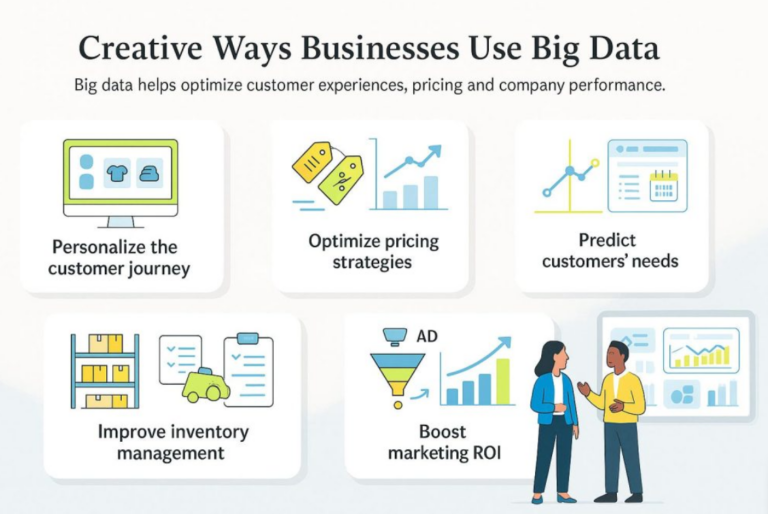
Retail companies heavily rely on Big Data to predict product demand. By analyzing past sales data, seasonal trends, and consumer preferences, they can optimize inventory.
Benefits include:
- Reduced overstocking
- Minimized product shortages
- Improved supply chain efficiency
For example, fashion retailers analyze seasonal buying patterns to predict which clothing styles will be popular months in advance.
6. Predictive Maintenance in Manufacturing
In manufacturing, Big Data is used to predict equipment failures before they happen.
Sensors installed in machines collect data such as:
- Temperature
- Vibration
- Pressure
- Operating speed
By analyzing this data, companies can predict when a machine is likely to break down and perform maintenance in advance.
This reduces:
- Downtime
- Repair costs
- Production delays
7. Financial Market Predictions
The finance industry is one of the biggest users of Big Data analytics. Traders and analysts use it to predict stock market movements.
Data sources include:
- Historical stock prices
- Economic indicators
- News sentiment
- Global events
Algorithmic trading systems analyze this data in milliseconds to make investment decisions.
While predictions are not always perfect, they significantly improve decision-making speed and accuracy.
8. Customer Personalization and Recommendation Systems
Companies like Amazon, Netflix, and Spotify use Big Data to predict what users want next.
They analyze:
- Viewing history
- Purchase behavior
- User ratings
- Time spent on content
This allows them to recommend:
- Movies and shows
- Products
- Music playlists
These recommendations are essentially predictions of future user behavior.
Technologies Behind Big Data Prediction
Several technologies power Big Data analytics:
Cloud Computing
Cloud platforms like AWS, Google Cloud, and Microsoft Azure provide scalable storage and computing power for analyzing massive datasets.
Hadoop Ecosystem
Hadoop enables distributed processing of large datasets across multiple computers.
Apache Spark
Spark allows fast real-time data processing and machine learning computations.
Artificial Intelligence
AI enhances predictive accuracy by identifying complex patterns humans cannot detect.
Data Warehousing
Data warehouses store structured data for easy access and analysis.
Benefits of Using Big Data for Trend Prediction
Companies that leverage Big Data gain several advantages:
1. Better Decision Making
Data-driven insights reduce guesswork and improve strategic planning.
2. Competitive Advantage
Businesses that predict trends early can outperform competitors.
3. Cost Efficiency
Predictive analytics reduces waste, improves resource allocation, and lowers operational costs.
4. Increased Revenue
Accurate predictions lead to better marketing strategies and higher sales.
5. Improved Customer Experience
Personalized recommendations enhance customer satisfaction and loyalty.
Challenges in Predicting Trends with Big Data
Despite its advantages, Big Data also comes with challenges:
1. Data Quality Issues
Inaccurate or incomplete data can lead to wrong predictions.
2. Privacy Concerns
Collecting and analyzing user data raises ethical and legal issues.
3. High Implementation Costs
Big Data infrastructure and tools can be expensive.
4. Complexity of Analysis
Handling massive datasets requires skilled professionals and advanced tools.
5. Data Security Risks
Large datasets are attractive targets for cyberattacks.
Real-World Examples of Big Data Trend Prediction
Amazon
Amazon uses predictive analytics to forecast product demand and optimize inventory distribution.
Netflix
Netflix predicts which shows will become popular and even produces original content based on data insights.
Google uses Big Data to predict search trends and improve ad targeting.
Walmart
Walmart analyzes sales data to predict shopping trends and manage supply chains efficiently.
The Future of Big Data in Trend Prediction
The future of Big Data is closely tied to advancements in AI and machine learning. As technology evolves, predictions will become:
- More accurate
- Faster
- More automated
- More personalized
Emerging trends include:
- Edge computing for faster data processing
- AI-driven autonomous decision systems
- Integration of quantum computing
- Hyper-personalized marketing strategies
In the future, businesses may rely entirely on predictive systems for decision-making.
Conclusion
Big Data has revolutionized the way companies understand and predict future trends. By analyzing vast amounts of structured and unstructured data, businesses can uncover patterns that were previously invisible.
From customer behavior analysis and social media sentiment tracking to financial forecasting and supply chain optimization, Big Data empowers organizations to make smarter, faster, and more accurate decisions.
While challenges such as data privacy and complexity remain, the benefits far outweigh the risks. As technology continues to evolve, Big Data will become even more powerful, enabling companies to not just react to the future—but actively shape it.
In a world driven by information, those who can effectively harness Big Data will lead the future of business innovation.