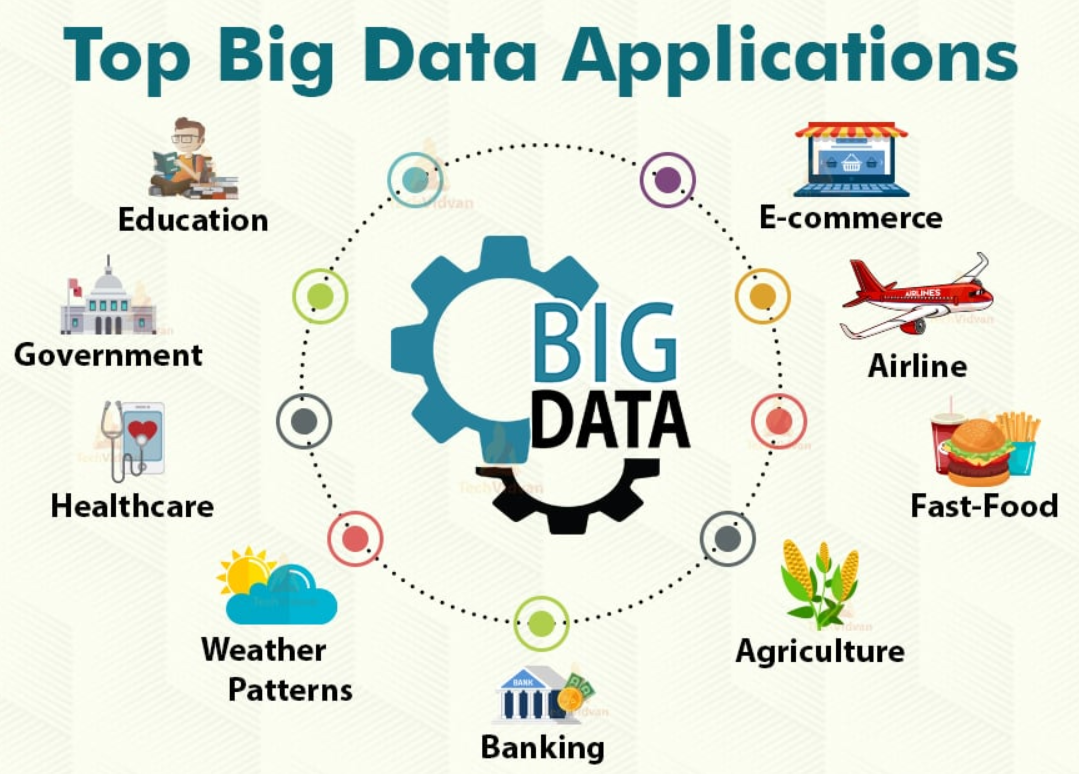
In today’s digital-first world, data has become one of the most valuable resources on the planet. Every click, search, purchase, and interaction generates information that can be analyzed and transformed into meaningful insights. This massive volume of structured and unstructured information is what we call Big Data.
Big Data is no longer just a buzzword used in tech circles—it is a driving force behind modern innovation across almost every industry. From healthcare and finance to retail and transportation, Big Data is reshaping how organizations operate, make decisions, and serve customers.
This article explores the real-life applications of Big Data in everyday industries, showing how it impacts our lives in ways we often don’t even notice.
What Is Big Data?
Big Data refers to extremely large datasets that are too complex and massive to be processed using traditional data processing tools. It is commonly defined by the “3 Vs”:
- Volume – Huge amounts of data generated every second
- Velocity – The speed at which data is created and processed
- Variety – Different types of data (text, images, videos, sensor data, etc.)
Modern systems also add more Vs such as Veracity (accuracy) and Value (usefulness).
Big Data becomes powerful when combined with analytics, machine learning, and artificial intelligence, allowing businesses to identify patterns, trends, and predictions.
1. Big Data in Healthcare Industry
One of the most impactful uses of Big Data is in healthcare. Medical institutions generate enormous amounts of patient data every day, including medical records, lab results, imaging data, and wearable device information.
Key Applications:
1. Disease Prediction and Prevention
Hospitals use Big Data analytics to predict disease outbreaks and identify patients at risk of chronic illnesses such as diabetes or heart disease.
2. Personalized Medicine
Doctors can create customized treatment plans based on a patient’s genetic data and medical history.
3. Medical Imaging Analysis
AI-powered systems analyze X-rays, MRIs, and CT scans to detect abnormalities faster and more accurately than humans.
4. Hospital Management Optimization
Big Data helps manage hospital resources such as staff scheduling, bed allocation, and supply chain efficiency.
Real Impact:
During global health crises, Big Data has played a critical role in tracking infections, predicting spread patterns, and managing healthcare responses efficiently.
2. Big Data in Retail and E-Commerce
Retail is one of the industries most transformed by Big Data. Every online click, product view, and purchase generates valuable insights.
Key Applications:
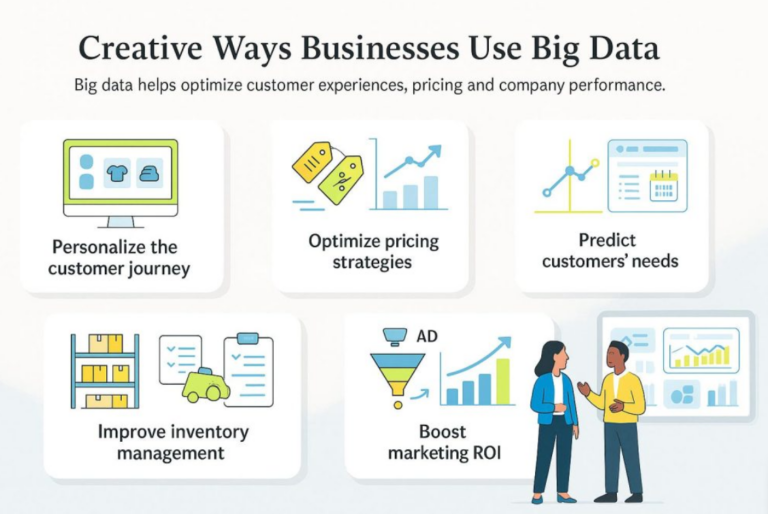
1. Personalized Recommendations
E-commerce platforms like Amazon and Netflix use Big Data to recommend products and content based on user behavior.
2. Customer Behavior Analysis
Retailers analyze shopping patterns to understand what customers want and when they want it.
3. Inventory Management
Big Data helps businesses predict demand and manage stock levels efficiently, reducing overstock and shortages.
4. Dynamic Pricing
Prices are adjusted in real-time based on demand, competition, and customer behavior.
Real Impact:
Shoppers today experience highly personalized online stores, where everything from ads to product suggestions is tailored specifically for them.
3. Big Data in Finance and Banking
The financial sector heavily relies on data-driven decision-making. Banks, insurance companies, and investment firms use Big Data for security, risk management, and customer service.
Key Applications:
1. Fraud Detection
Big Data systems analyze millions of transactions in real-time to detect suspicious activities.
2. Credit Scoring
Financial institutions use data analytics to assess creditworthiness beyond traditional credit scores.
3. Algorithmic Trading
Stock markets use Big Data algorithms to make fast trading decisions based on market trends.
4. Risk Management
Banks evaluate risks by analyzing economic data, customer behavior, and market fluctuations.
Real Impact:
Every time you receive a fraud alert from your bank, it is likely powered by Big Data analytics working behind the scenes.
4. Big Data in Transportation and Logistics
Transportation systems generate massive data from GPS devices, traffic sensors, and mobile apps.
Key Applications:
1. Traffic Optimization
Navigation apps like Google Maps use Big Data to provide real-time traffic updates and route optimization.
2. Fleet Management
Logistics companies track vehicles to improve delivery efficiency and reduce fuel costs.
3. Predictive Maintenance
Sensors in vehicles detect issues before breakdowns occur.
4. Ride-Sharing Optimization
Companies like Uber and Grab use Big Data to match drivers with passengers efficiently.
Real Impact:
Commuters now enjoy faster travel times and more reliable transport services thanks to intelligent data-driven systems.
5. Big Data in Education
Education systems are also benefiting from data-driven insights.
Key Applications:
1. Personalized Learning
Online learning platforms adapt content based on student performance.
2. Performance Tracking
Teachers analyze student data to identify strengths and weaknesses.
3. Course Recommendation Systems
Students receive suggestions for courses based on interests and academic history.
4. Administrative Efficiency
Schools use data to improve resource allocation and enrollment management.
Real Impact:
Education is becoming more flexible and student-centered, improving learning outcomes globally.
6. Big Data in Marketing and Advertising
Marketing has been revolutionized by data analytics.
Key Applications:
1. Targeted Advertising
Businesses show ads to users based on browsing history and interests.
2. Customer Segmentation
Companies divide audiences into groups for more effective campaigns.
3. Campaign Performance Analysis
Marketers track real-time performance of ads and adjust strategies instantly.
4. Social Media Analytics
Brands analyze engagement metrics to improve content strategy.
Real Impact:
Consumers now see ads that are highly relevant to their interests, improving engagement and conversion rates.
7. Big Data in Manufacturing
Manufacturing industries use Big Data to increase productivity and reduce costs.
Key Applications:
1. Predictive Maintenance
Machines are monitored in real-time to prevent breakdowns.
2. Supply Chain Optimization
Manufacturers track materials and production processes efficiently.
3. Quality Control
Data analytics helps detect defects early in production.
4. Smart Factories
IoT devices collect data to automate manufacturing processes.
Real Impact:
Factories are becoming smarter, more efficient, and less wasteful.
8. Big Data in Entertainment and Media
Entertainment platforms rely heavily on data to understand audience behavior.
Key Applications:
1. Content Recommendation
Platforms like Netflix and Spotify suggest movies, shows, and songs based on user preferences.
2. Audience Analytics
Studios analyze viewer data to decide which content to produce.
3. Streaming Optimization
Data helps improve video quality and reduce buffering.
4. Trend Prediction
Media companies identify trending topics and viral content early.
Real Impact:
Entertainment has become highly personalized and interactive.
9. Big Data in Agriculture
Agriculture has also entered the digital era.
Key Applications:
1. Precision Farming
Farmers use sensors and satellite data to monitor soil and crop health.
2. Weather Prediction
Data helps predict weather conditions for better farming decisions.
3. Yield Optimization
Analytics improves crop production efficiency.
4. Supply Chain Management
Farmers track distribution and reduce food waste.
Real Impact:
Food production is becoming more efficient and sustainable.
10. Big Data in Government and Smart Cities
Governments use Big Data to improve public services and infrastructure.
Key Applications:
1. Smart City Planning
Data helps design efficient urban infrastructure.
2. Crime Prediction
Law enforcement uses analytics to identify crime patterns.
3. Public Health Monitoring
Governments track disease outbreaks and health trends.
4. Transportation Systems
Traffic management systems reduce congestion.
Real Impact:
Cities are becoming safer, smarter, and more livable.
Challenges of Big Data
Despite its benefits, Big Data also presents challenges:
- Data Privacy Concerns
- Security Risks
- High Implementation Costs
- Complex Data Management
- Need for Skilled Professionals
Organizations must balance innovation with ethical data usage and security measures.
Future of Big Data
The future of Big Data is closely tied to artificial intelligence, machine learning, and automation. As technology advances, data will become even more central to decision-making.
Emerging trends include:
- Real-time analytics everywhere
- AI-driven decision systems
- Edge computing for faster processing
- Integration with IoT devices
- Greater focus on data ethics and privacy
Conclusion
Big Data is no longer a futuristic concept—it is already deeply embedded in our daily lives. From healthcare and education to transportation and entertainment, it is shaping how industries operate and how people experience the world.
As the volume of data continues to grow, its applications will become even more powerful and transformative. Businesses that effectively harness Big Data will gain a significant competitive advantage, while individuals will benefit from more personalized, efficient, and intelligent services.
Understanding the real-life applications of Big Data is essential for anyone who wants to stay relevant in the modern digital economy.