In today’s digital economy, data is often described as the “new oil” — a valuable resource that powers innovation, decision-making, and business growth. Among all types of data, Big Data has emerged as one of the most powerful tools businesses can use to improve profitability and operational efficiency. Companies across industries are leveraging Big Data analytics to understand customers better, optimize processes, reduce costs, and gain a competitive advantage.
But what exactly is Big Data, and how does it translate into real business profit and efficiency? This article explores the concept in depth, explains its core benefits, and shows how organizations are using it to transform their operations in the modern marketplace.
What Is Big Data?
Big Data refers to extremely large and complex datasets that cannot be processed effectively using traditional data-processing tools. It is typically characterized by the 3Vs:
- Volume: Massive amounts of data generated every second from digital sources.
- Velocity: The speed at which data is created and processed in real time.
- Variety: Different types of data including text, images, videos, sensor data, and social media content.
Some experts also add additional Vs such as Veracity (data accuracy) and Value (usefulness of data).
Businesses collect Big Data from various sources such as:
- Customer transactions
- Social media platforms
- Website analytics
- IoT devices and sensors
- Mobile applications
- CRM systems
When properly analyzed, this data becomes a powerful asset that drives smarter decisions and higher profitability.
The Role of Big Data in Modern Business
Big Data is not just about collecting information—it is about transforming raw data into actionable insights. Businesses use advanced analytics, artificial intelligence (AI), and machine learning algorithms to identify patterns and trends that humans might miss.
This enables companies to:
- Predict customer behavior
- Improve operational efficiency
- Reduce unnecessary costs
- Increase revenue opportunities
- Enhance customer satisfaction
In a competitive global market, companies that fail to use Big Data risk falling behind more data-driven competitors.
How Big Data Increases Business Profit
1. Better Customer Understanding
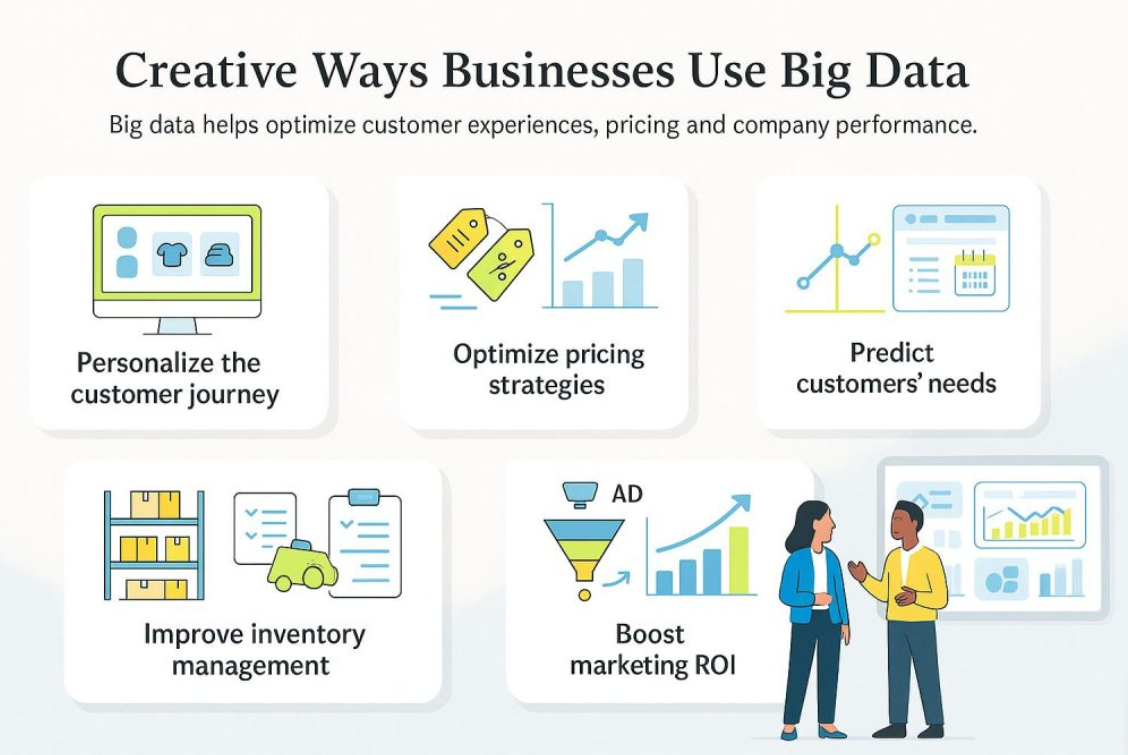
One of the biggest advantages of Big Data is its ability to provide deep insights into customer behavior. Businesses can analyze purchase history, browsing patterns, feedback, and social media activity to understand what customers want.
This allows companies to:
- Create personalized marketing campaigns
- Recommend relevant products
- Improve customer experience
- Increase customer retention
For example, e-commerce companies use Big Data to recommend products based on user preferences, which significantly increases conversion rates and sales.
2. Personalized Marketing Strategies
Traditional marketing often targets a broad audience, which can be inefficient. Big Data enables precision marketing, where companies deliver personalized messages to the right audience at the right time.
By analyzing customer demographics and behavior, businesses can:
- Segment audiences more effectively
- Deliver targeted advertisements
- Increase click-through and conversion rates
- Reduce marketing costs
This level of personalization leads to higher ROI on marketing campaigns.
3. Improved Pricing Strategies
Big Data helps businesses determine optimal pricing strategies through real-time market analysis. Companies can evaluate competitor pricing, customer demand, and market trends to adjust prices dynamically.
This is especially useful in industries like:
- Airlines
- Hotels
- E-commerce
- Ride-sharing services
Dynamic pricing ensures businesses maximize profit without losing customers due to overpriced products or services.
4. Identifying New Revenue Opportunities
By analyzing customer trends and market gaps, Big Data allows companies to discover new business opportunities. For example:
- A retail company may identify a demand for a new product category.
- A streaming service may create content based on viewer preferences.
- A bank may develop new financial products based on spending patterns.
These insights help businesses expand their offerings and increase revenue streams.
5. Reducing Customer Churn
Customer retention is more cost-effective than acquiring new customers. Big Data analytics helps businesses predict when customers are likely to leave by analyzing behavior patterns.
Once identified, companies can:
- Offer discounts or incentives
- Improve customer support
- Address service issues proactively
This reduces churn rates and increases long-term profitability.
How Big Data Improves Operational Efficiency
1. Streamlining Business Processes
Big Data helps businesses identify inefficiencies in their operations. By analyzing workflows, companies can detect bottlenecks and eliminate unnecessary steps.
For example:
- Manufacturing companies can optimize production lines.
- Logistics companies can improve delivery routes.
- Service companies can automate repetitive tasks.
This results in faster operations and reduced operational costs.
2. Supply Chain Optimization
One of the most powerful applications of Big Data is in supply chain management. Businesses can track inventory levels, supplier performance, and demand patterns in real time.
This helps companies:
- Avoid overstocking or stockouts
- Improve delivery times
- Reduce transportation costs
- Predict demand more accurately
Efficient supply chain management directly improves profitability.
3. Predictive Maintenance
In industries that rely on machinery and equipment, unexpected breakdowns can be very costly. Big Data enables predictive maintenance by analyzing sensor data from machines.
Companies can:
- Predict equipment failures before they happen
- Schedule maintenance proactively
- Reduce downtime
- Extend equipment lifespan
This leads to significant cost savings and improved productivity.
4. Workforce Optimization
Big Data also helps businesses manage their workforce more efficiently. By analyzing employee performance and productivity data, companies can:
- Assign tasks more effectively
- Identify training needs
- Improve employee satisfaction
- Reduce labor costs
This ensures that human resources are used in the most productive way possible.
5. Real-Time Decision Making
One of the key advantages of Big Data is the ability to make decisions in real time. Businesses no longer need to wait for monthly reports—they can access live dashboards and analytics.
This allows companies to:
- Respond quickly to market changes
- Adjust strategies instantly
- Monitor performance continuously
- Reduce risks
Real-time decision-making improves agility and competitiveness.
Big Data Across Different Industries
Retail
Retailers use Big Data to analyze customer behavior, manage inventory, and personalize shopping experiences. Online stores like Amazon rely heavily on Big Data to recommend products and optimize sales.
Healthcare
Healthcare providers use Big Data to improve patient care, predict disease outbreaks, and optimize hospital operations. It also helps in drug development and personalized medicine.
Finance
Banks and financial institutions use Big Data for fraud detection, risk management, and credit scoring. It helps in making more accurate lending decisions.
Manufacturing
Manufacturers use Big Data to improve production efficiency, reduce waste, and implement predictive maintenance strategies.
Transportation
Transportation companies use Big Data to optimize routes, reduce fuel consumption, and improve delivery times.
Challenges of Big Data Implementation
Despite its benefits, implementing Big Data comes with challenges:
1. Data Privacy and Security
Handling large volumes of sensitive data increases the risk of breaches and cyberattacks.
2. High Implementation Costs
Big Data infrastructure and tools can be expensive for small businesses.
3. Skilled Workforce Requirement
Companies need skilled data scientists and analysts to interpret Big Data effectively.
4. Data Quality Issues
Poor-quality data can lead to inaccurate insights and bad decision-making.
The Future of Big Data in Business
The future of Big Data is closely tied to advancements in AI, machine learning, and cloud computing. As technology evolves, Big Data will become even more powerful and accessible.
Future trends include:
- Increased use of AI-driven analytics
- Real-time predictive systems
- Greater automation in decision-making
- Integration with IoT devices
- Expansion of cloud-based data platforms
Businesses that invest in Big Data today will be better positioned to compete in the future digital economy.
Conclusion
Big Data has revolutionized the way businesses operate by turning massive amounts of raw information into valuable insights. From improving customer understanding and marketing strategies to optimizing operations and reducing costs, Big Data plays a crucial role in increasing both profit and efficiency.
In an increasingly competitive world, businesses that embrace Big Data analytics gain a significant advantage over those that rely on traditional decision-making methods. Whether in retail, finance, healthcare, or manufacturing, Big Data continues to reshape industries and drive innovation.
Ultimately, the organizations that successfully harness the power of Big Data will be the ones that lead the future of global business.